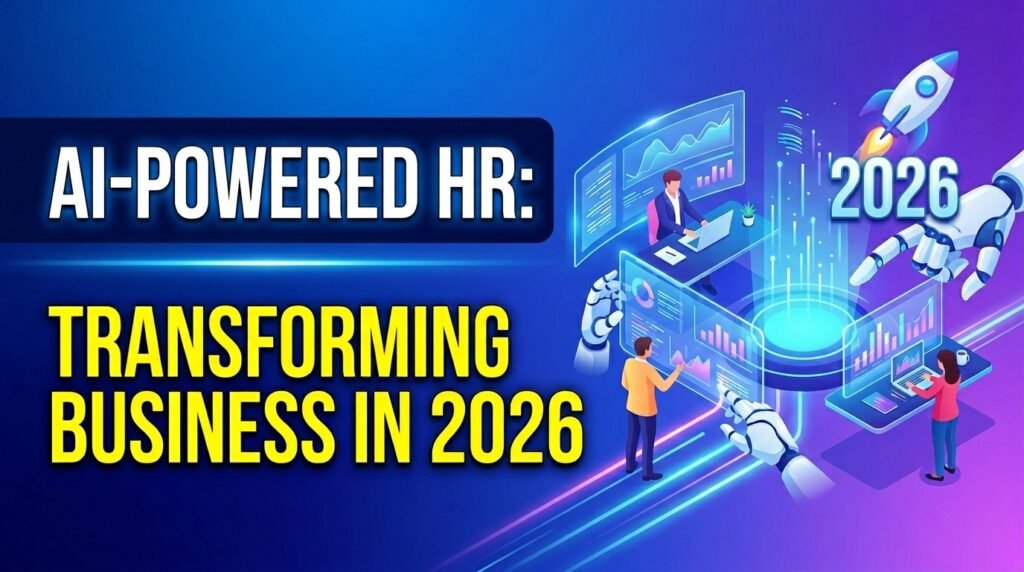

Businesses are under pressure to hire faster, manage remote teams better, and reduce operational costs without burning out HR departments. That’s one reason AI-powered HR software is becoming a serious priority in 2026.
From what I’ve seen, many HR teams are no longer spending most of their day on strategy or employee development. They’re stuck handling repetitive admin work like resume filtering, onboarding paperwork, scheduling interviews, payroll adjustments, and answering the same employee questions repeatedly. AI is changing that.
Companies are now using smart HR systems to automate hiring workflows, improve workforce analytics, and personalize employee experiences. The shift isn’t just about saving time anymore. It’s about making better decisions with data.
A few years ago, AI in human resources sounded experimental. In 2026, it’s becoming part of standard business operations.
What Is AI-Powered HR Software?
Definition and Core Features
AI-powered HR software is a digital HR system that uses machine learning, automation, predictive analytics, and data intelligence to handle human resource tasks more efficiently.
Unlike traditional HR software, these platforms don’t just store employee data. They analyze it.
Most modern HR solutions now include:
- AI recruitment tools
- Automated onboarding workflows
- Smart attendance tracking
- AI payroll automation
- Workforce analytics dashboards
- Employee engagement monitoring
- Predictive hiring and retention insights
One thing many people overlook is personalization. Good AI HR platforms don’t treat every employee the same way. They adapt recommendations based on employee behavior, performance trends, and workplace interactions.
| HR Function | Traditional HR Software | AI-Powered HR Software |
|---|---|---|
| Resume Screening | Manual filtering | Automated candidate ranking |
| Employee Support | HR email support | AI chatbots and instant responses |
| Performance Reviews | Annual reviews | Real-time analytics and feedback |
| Workforce Planning | Reactive hiring | Predictive staffing forecasts |
| Employee Engagement | Surveys only | Sentiment and burnout analysis |
How AI Will Transform Recruitment in 2026
Faster Hiring and Smarter Candidate Matching
Recruitment is probably where AI is making the biggest impact first.
Hiring managers are tired of reviewing hundreds of resumes for one position. AI hiring software can now scan thousands of applications in minutes and identify candidates based on skills, behavior patterns, experience, and even likelihood of long-term retention.
That cuts hiring time dramatically.
I’ve spoken with recruiters who said AI-driven recruitment systems reduced their screening workload by nearly half. Instead of manually sorting resumes all day, they spend more time interviewing qualified candidates.
Automated Resume Screening
AI resume screening tools use natural language processing to analyze resumes beyond keywords.
That matters because older applicant tracking systems often rejected good candidates for small formatting issues or missing exact phrases. New AI-powered ATS platforms are getting better at understanding context and transferable skills.
Recruitment automation software is also improving:
- Interview scheduling
- Candidate communication
- Background verification
- Job matching recommendations
- Recruitment analytics
The result is a smoother hiring process for both recruiters and applicants.
Read Also: https://garminlive.com/how-digital-marketing-is-transforming-coaching-institutes-in-2026/
AI and Employee Onboarding Experience
Personalized Onboarding Journeys
First impressions at work matter more than companies think.
A weak onboarding experience usually leads to confusion, lower productivity, and early resignations. AI onboarding software helps businesses create more structured and personalized onboarding workflows.
Instead of sending every employee through the same generic process, AI onboarding platforms can customize training paths based on department, role, experience level, and learning speed.
That makes the first week less overwhelming.
AI Chatbots for New Employees
AI HR assistants are becoming surprisingly useful during onboarding.
New employees often ask repetitive questions:
- How do I apply for leave?
- Where can I access payroll details?
- How do benefits work?
- Who approves remote work requests?
AI chatbots can answer these instantly without HR needing to step in every time.
From what I’ve noticed, employees appreciate quick responses more than companies realize. Waiting two days for a basic HR reply creates unnecessary frustration.
AI-Powered Employee Performance Management
Real-Time Feedback and Analytics
Annual performance reviews are slowly becoming outdated.
AI performance management systems now track employee progress continuously using workplace analytics, KPI tracking, and productivity insights.
Managers can identify problems earlier instead of discovering them during end-of-year reviews.
More importantly, employees receive ongoing feedback rather than vague comments every six months.
Predictive Employee Performance Insights
Predictive HR analytics is where things get interesting.
AI workforce management tools can detect patterns linked to performance drops, disengagement, or missed targets. Some platforms even recommend personalized coaching or training programs automatically.
This doesn’t mean AI replaces managers. It gives managers clearer visibility into team performance.
Good leaders still need human judgment.
AI in Employee Engagement and Retention
Reducing Employee Burnout
Burnout has become a real business problem, especially in remote and hybrid workplaces.
AI employee engagement platforms now monitor signals like excessive overtime, declining productivity, low participation, or communication changes to detect burnout risks early.
That sounds invasive to some people, and honestly, companies need to handle it carefully. But when used responsibly, it can help managers intervene before employees quit unexpectedly.
Improving Workplace Satisfaction
AI-driven engagement tools also help businesses understand employee sentiment through surveys, feedback analysis, and communication trends.
Some systems even automate employee recognition by highlighting achievements managers may overlook.
Small recognition moments matter more than expensive perks sometimes.
Employees who feel noticed generally stay longer.
AI and HR Data Analytics for Better Business Decisions
Predictive Workforce Planning
One of the biggest advantages of HR analytics software is forecasting.
AI workforce planning tools can predict:
- Hiring needs
- Staffing shortages
- High turnover risk
- Seasonal workforce demand
- Skills gaps
That helps businesses avoid reactive hiring decisions.
Retail companies, for example, can prepare staffing schedules ahead of busy shopping seasons instead of scrambling at the last minute.
Data-Driven HR Strategies
HR leaders are increasingly relying on AI dashboards instead of guesswork.
Modern AI reporting tools provide real-time workforce intelligence that helps companies make smarter decisions around recruitment, employee retention, compensation, and productivity.
Many businesses still underestimate how valuable employee data can be when analyzed properly.
AI Compliance, Security, and Ethical Challenges
Data Privacy Risks
AI HR software collects massive amounts of employee information, which creates obvious privacy concerns.
Businesses need secure HR platforms with strong encryption, compliance tracking, and transparent data policies.
Employee trust disappears quickly if companies misuse workforce data.
Ethical AI in HR
Bias in AI hiring systems is still a legitimate concern.
If AI models are trained using biased historical hiring data, they can unintentionally repeat discrimination patterns.
That’s why ethical AI in HR matters so much in 2026. Human oversight remains necessary, especially for hiring and employee evaluations.
Automation should support HR decisions, not blindly replace them.
Industries That Will Benefit Most from AI HR Software
Startups, Enterprises, Healthcare, Retail, Remote Teams
Different industries are adopting AI HR tools for different reasons.
Startups use AI recruitment software to scale quickly without building massive HR teams.
Healthcare organizations use workforce analytics to manage staffing shortages and scheduling complexity.
Retail businesses rely on AI employee scheduling and hiring automation during peak seasons.
Remote companies benefit from AI-powered employee engagement and productivity tracking tools.
Large enterprises, meanwhile, use AI HR platforms to manage thousands of employees across multiple regions.
Future Trends in AI-Powered HR Software Beyond 2026
Generative AI in HR
Generative AI is starting to appear in HR systems in practical ways.
HR teams are already using AI to generate job descriptions, onboarding content, interview summaries, and workforce reports.
Voice-based AI assistants will likely become more common too.
AI-Powered Workforce Personalization
The future of HR software looks more proactive than reactive.
AI systems will probably recommend career paths, learning opportunities, internal promotions, and even wellness support based on employee behavior and performance data.
The workplace is becoming increasingly personalized.
Some employees will love that. Others may find it uncomfortable.
FAQs
Is AI-powered HR software suitable for small businesses?
Yes. Many cloud HR platforms now offer affordable pricing for startups and small businesses.
Can AI replace HR professionals completely?
No. AI handles repetitive tasks and analytics, but human judgment and relationship management are still essential.
What are the biggest benefits of AI in HR?
Faster hiring, better workforce analytics, improved employee engagement, and reduced administrative workload.
Is AI HR software secure for employee data?
It can be secure if companies choose platforms with strong encryption, compliance tools, and privacy protections.
Which industries benefit most from AI HR automation?
Healthcare, retail, startups, remote businesses, and large enterprises are seeing major benefits.
What should companies look for before buying AI HR software?
Scalability, integrations, security, analytics capabilities, and ease of use are key factors.
How much does AI HR software cost in 2026?
Pricing varies widely. Small business plans may start around monthly subscriptions, while enterprise platforms cost significantly more.
Will AI improve employee engagement and retention?
In many cases, yes. AI tools can identify burnout risks, personalize employee experiences, and improve workplace communication.
Conclusion — Why Businesses Must Adopt AI HR Software Early
Businesses that delay AI HR adoption will likely struggle to compete with companies operating faster and more efficiently.
AI-powered HR software is no longer just an automation tool. It’s becoming part of workforce strategy, employee experience, and business growth planning.
The companies getting ahead in 2026 are the ones using AI to improve hiring, reduce administrative workload, support employees better, and make smarter workforce decisions.
Human HR teams still matter. Probably more than ever.
But they’ll increasingly rely on intelligent HR platforms to do their jobs effectively.
About The Author