
If you’ve ever joined a company and received your offer letter on time, got paid correctly, had your leave approved smoothly, or completed onboarding without confusion, you’ve already experienced HR operations in action.
So, what is HR operations exactly?
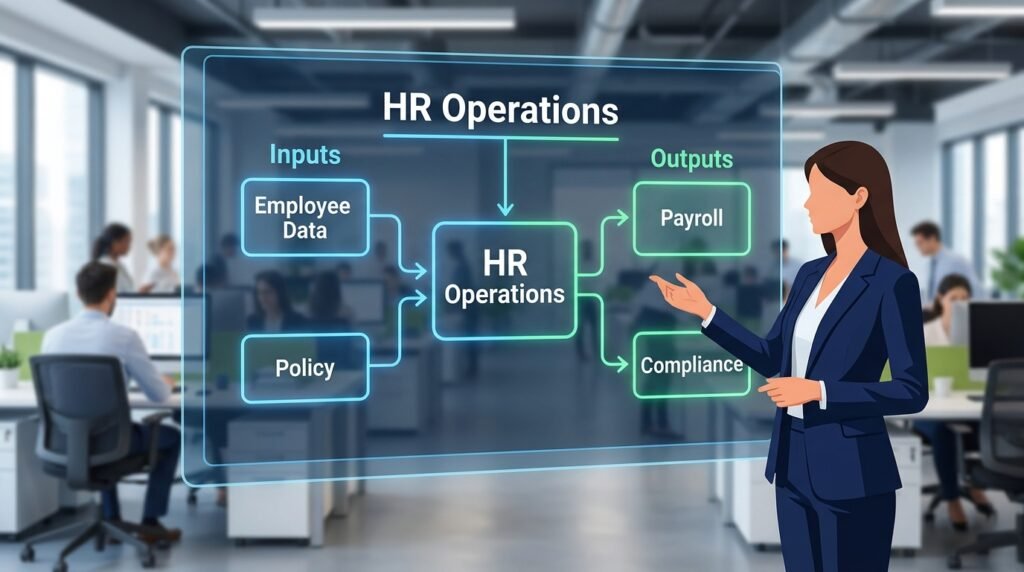
In simple terms, HR operations refers to the day-to-day processes and systems that keep the HR department running properly. It covers everything from employee records and payroll to onboarding, compliance, and benefits administration. While HR managers may focus on strategy and culture, HR handles the execution side.
From what I’ve seen in growing companies, HR often becomes noticeable only when something goes wrong. A delayed salary, missing documents, or messy onboarding can frustrate employees quickly. Good HR operational management usually works quietly in the background.
Think of it like this: if HR is the brain of employee management, HR operations is the engine that keeps the entire workflow moving.
Why HR Operations Matter in Modern Businesses
A lot of businesses underestimate the importance of strong HR operations until they start scaling.
When employee data is disorganized or payroll processes are manual, HR teams spend most of their time fixing problems instead of improving employee experience. Efficient HR process management reduces that chaos.
Good HR operations help businesses by:
- Improving workforce productivity
- Reducing administrative workload
- Supporting compliance and documentation
- Creating a smoother employee lifecycle
- Standardizing HR workflows
Employees also notice the difference. Fast responses from HR, accurate payroll, and clear leave policies make people feel supported. That directly affects retention and morale.
One company I worked with moved from spreadsheets to an HRMS platform after crossing 80 employees. Within a few months, attendance tracking and leave approvals became much easier, and managers stopped chasing paperwork every week.
Read Also: https://garminlive.com/why-smart-businesses-are-upgrading-their-monitoring-systems-in-2026/
Key Responsibilities of HR Operations
Employee Record Management
Employee records management is one of the most important HR operations responsibilities.
HR teams maintain digital employee files, contracts, tax documents, attendance records, and performance history. Confidentiality matters here because employee information must stay secure and compliant with labor regulations.
Most modern HR operational systems now use cloud-based employee database management tools instead of physical files. It saves time and reduces errors.
Payroll & Compensation Administration
Payroll processing sounds straightforward until you actually handle it.
Salary calculations, overtime, deductions, taxes, and bonuses all need accuracy. One payroll mistake can damage employee trust quickly.
HR teams usually work with payroll software to automate salary administration and improve payroll compliance. Timely salary processing is honestly one of the clearest indicators of operational HR efficiency.
Benefits Administration
Benefits administration includes leave management, health insurance coordination, retirement benefits, and employee wellness programs.
Many people overlook how much employee satisfaction depends on these small operational details. A confusing leave process or delayed insurance support creates unnecessary frustration.
Modern HR operations workflows often include employee self-service portals where staff can check leave balances or update benefit information themselves.
HR Policy Implementation
Policies only work if they’re implemented consistently.
HR operations teams help enforce workplace regulations, employee conduct policies, attendance rules, and compliance procedures across departments.
For example, if remote work policies differ depending on the manager, employees quickly notice the inconsistency. Operational HR support helps standardize those processes.
Core Functions of HR Operations
The core HR functions usually cover the full employee lifecycle:
- Recruitment coordination
- Employee onboarding process
- Attendance management
- Payroll and compensation
- HR reporting and workforce analytics
- Employee relations support
- Performance management support
- Exit and offboarding process
In most companies, HR acts as the bridge between employees, managers, finance teams, and leadership.
HR Operations vs HR Management
A lot of people confuse HR operations with HR management, but they’re not exactly the same.
| HR Operations | HR Management |
|---|---|
| Focuses on execution and processes | Focuses on strategy and planning |
| Handles payroll, records, onboarding | Handles culture, leadership, talent strategy |
| Operational and administrative | Strategic and people-focused |
| Ensures HR workflows run smoothly | Builds long-term HR goals |
In reality, both functions overlap often. But HR handles the practical side of human resources operations while HR management shapes broader business direction.
HR Operations Team Structure
HR Operations Manager
The HR operations manager usually oversees HR processes, systems, compliance, and workflow improvement.
This role requires strong organizational skills because they coordinate payroll, employee records, reporting, and HR technology together. In medium-sized companies, they also supervise HR coordinators and specialists.
HR Coordinators & Specialists
HR coordinators and HR support specialists manage daily employee communication and administrative tasks.
Their work often includes:
- Interview scheduling
- Maintaining employee documentation
- Updating HR systems
- Supporting onboarding workflows
- Assisting employees with HR requests
They’re usually the first point of contact employees interact with.
Essential HR Operations Processes
Recruitment Support
FbankRecruitment operations involve job posting, interview scheduling, applicant tracking systems, and hiring coordination.
A smooth hiring process leaves a strong first impression on candidates. Messy communication during recruitment can push good applicants away surprisingly fast.
Employee Onboarding
Employee onboarding includes orientation, document collection, training schedules, and account setup.
Good onboarding workflows help new hires feel comfortable quickly. Poor onboarding usually creates confusion during the first few weeks.
Performance Management Support
HR operations teams often support the performance review process by maintaining evaluation records, tracking review cycles, and organizing employee feedback systems.
Managers may lead evaluations, but operational HR teams keep the process structured.
Exit & Offboarding
Employee offboarding is just as important as onboarding.
Exit interviews, final settlements, access removal, and knowledge transfer processes all need proper coordination. Companies that ignore offboarding often create security and compliance risks without realizing it.
Best HR Operations Tools & Software
Modern HR operations rely heavily on automation tools.
Common HR software categories include:
- HRMS platforms for employee management
- ATS systems for recruitment
- Payroll software solutions
- Attendance management software
- Employee onboarding tools
- HR analytics and reporting systems
Automation reduces repetitive manual work significantly. From what I’ve seen, even basic HR workflow software can save hours every week for smaller HR teams.
Common Challenges in HR Operations
HR sounds organized on paper, but daily execution can get messy.
Some common HR administration issues include:
- Payroll errors
- Employee data management problems
- Onboarding delays
- Compliance risks
- Manual HR tasks
- Employee communication gaps
- Outdated HR systems
Remote workforce management has added another layer of complexity too. Tracking attendance, onboarding remote hires, and maintaining engagement across distributed teams isn’t easy without proper systems.
Many HR operational inefficiencies still come from relying too heavily on spreadsheets and disconnected tools.
Best Practices for Effective HR Operations
Some practical HR operations best practices that genuinely help:
- Automate repetitive HR workflows where possible
- Conduct regular HR compliance audits
- Keep employee records updated
- Standardize onboarding and offboarding checklists
- Use HR dashboards for reporting and analytics
- Improve employee communication channels
- Review payroll processes regularly
Small operational improvements usually create noticeable results over time.
HR Operations Metrics & KPIs
Tracking HR metrics helps businesses measure operational success.
Important HR KPIs include:
- Employee turnover rate
- Time to hire
- Payroll accuracy rate
- Absenteeism rate
- Employee satisfaction scores
- Retention metrics
- Onboarding completion rates
Without measurable data, HR process improvement becomes mostly guesswork.
Read Also: https://garminlive.com/openai-launches-gpt-5-4-can-it-outperform-claude-and-gemini/
Future Trends in HR Operations
The future of HR operations is clearly moving toward automation and data-driven decision-making.
AI in HR operations is already helping with recruitment screening, onboarding automation, and workforce analytics. Cloud-based HR systems and employee self-service platforms are becoming standard rather than optional.
Remote work trends have also changed how companies manage employee operations. Virtual onboarding, digital document signing, and remote attendance tracking are now part of normal HR workflows in many businesses.
I think the biggest shift will be around employee experience management. Companies are realizing operational efficiency affects culture more than they expected.
FAQs
What does HR operations do?
HR operations manages daily HR processes like payroll, onboarding, employee records, compliance, attendance, and benefits administration.
Is HR operations a good career?
Yes, HR is a solid career path for people who enjoy organization, systems, communication, and process management. Demand for HR specialists continues to grow.
What skills are needed for HR operations?
Key HR operations skills include communication, payroll knowledge, HR software skills, compliance understanding, organization, and employee management abilities.
What is the difference between HR and HR operations?
HR management focuses more on strategy and workforce planning, while HR operations handles execution, administration, and daily HR workflows.
Which tools are used in HR operations?
Common HR operations tools include HRMS platforms, payroll systems, applicant tracking systems, attendance software, onboarding tools, and workforce analytics platforms.
Conclusion
HR operations may not always get attention inside a business, but it plays a major role in keeping employees supported and processes organized.
When HR workflows are efficient, employees notice fewer problems, managers save time, and businesses scale more smoothly. On the other hand, weak HR operational systems usually create frustration quietly in the background.
The companies that invest in better HR process management, automation, and employee support systems tend to build stronger workplace experiences over time.
About The Author




Pingback: How AI-Powered HR Software Will Transform Businesses in 2026 - Garmin Live®