
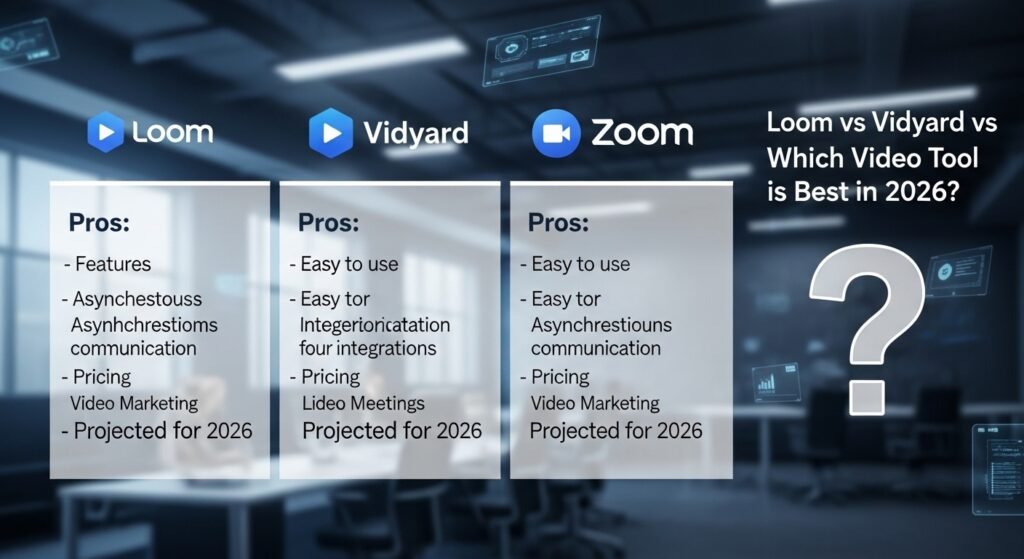

If you’ve worked remotely anytime in the past few years, you’ve probably used at least one of these: Loom vs Vidyard vs Zoom. I’ve personally bounced between all three depending on what I needed quick updates, client outreach, or full team meetings.
But here’s the real question: which one should you choose?
This isn’t just a basic video communication tools comparison. Each platform solves a different problem. Loom leans heavily into async video tools, Vidyard focuses on sales-driven video messaging platforms, and Zoom dominates live calls and webinars.
The confusion usually comes from overlap. They all record video. They all let you share it. But how they do it and why matters a lot.
Quick Comparison Table (At a Glance)
Here’s a quick side-by-side snapshot to get oriented:
| Feature | Loom | Vidyard | Zoom |
|---|---|---|---|
| Primary Use | Async video messaging | Sales & marketing videos | Live meetings/webinars |
| Recording | Screen + webcam | Screen + webcam | Meeting + local recording |
| Sharing | Instant link | Trackable links | Invite-based |
| Analytics | Basic | Advanced | Moderate |
| Pricing | Free + paid tiers | Free + complex tiers | Free + subscription plans |
| Best For | Quick team updates | Sales outreach | Live collaboration |
This pretty much sums up the core differences in loom vs zoom features and vidyard vs loom comparison table discussions you’ll see online.
What is Loom?
Loom is one of those tools that feels almost too simple at first but that’s kind of the point.
Key Features of Loom
- Screen + webcam recording in one click
- Instant shareable links (no downloads needed)
- Chrome extension for fast access
- Basic editing tools
- Lightweight AI features like summaries
From what I’ve seen, Loom works best when you don’t want to schedule a meeting just to explain something small.
Pros and Cons of Loom
Pros:
- Extremely easy to use
- Great for async communication
- Fast sharing without friction
Cons:
- Limited live interaction
- Basic analytics compared to competitors
- Not ideal for large teams needing structured collaboration
If you’re comparing screen recording vs video conferencing, Loom is clearly in the recording-first category.
Read more: https://garminlive.com/cyber-risk-awareness-in-2026/
What is Vidyard?
Vidyard is a different beast. It’s not just a video tool it’s more like a sales weapon disguised as video software.
Key Features of Vidyard
- Personalized video creation for outreach
- Advanced analytics (who watched, how long, etc.)
- Integrations with CRMs and sales tools
- Screen recording + webcam
- AI tools for scripting and optimization
I’ve seen sales teams rely heavily on Vidyard because it gives insight not just video.
Pros and Cons of Vidyard
Pros:
- Powerful analytics and tracking
- Excellent for personalized video outreach
- Strong integrations
Cons:
- Pricing can get confusing
- Overkill for casual or internal use
- Slight learning curve
Many people overlook this, but Vidyard shines when video is tied directly to revenue.
What is Zoom?
Zoom is probably the most familiar name here. It became the default for live meetings and honestly, it still holds that position.
Key Features of Zoom
- HD video conferencing
- Screen sharing and collaboration tools
- Webinar hosting
- Meeting recording
- Breakout rooms and team features
It’s built for real-time interaction. That’s its strength.
Pros and Cons of Zoom
Pros:
- Reliable live communication
- Scales well for teams and webinars
- Familiar interface
Cons:
- Meeting fatigue is real
- Not designed for async workflows
- Can feel heavy for quick communication
Zoom is clearly the leader in live video conferencing tools, but it’s not always the most efficient option.
Loom vs Vidyard vs Zoom: Feature-by-Feature Comparison
Ease of Use
Loom wins here, no contest. You click, record, and share.
Zoom is also straightforward, but scheduling meetings adds friction. Vidyard takes more setup, especially if you’re using its full feature set.
Video Quality & Recording
All three offer solid HD recording, but the experience differs.
- Loom: quick and clean screen recordings
- Vidyard: polished videos with branding options
- Zoom: optimized for live calls, not standalone recordings
If you care about screen recording quality, Loom and Vidyard feel more intentional.
Collaboration & Sharing
Loom makes sharing effortless with links. Vidyard adds tracking on top of that, which is useful for external communication.
Zoom, on the other hand, is built around live interaction rather than sharing recorded content.
Analytics & Tracking
This is where Vidyard dominates.
- Vidyard: deep viewer insights
- Loom: basic engagement tracking
- Zoom: meeting reports and attendance
If tracking viewer behavior matters, Vidyard is hard to beat.
Pricing Comparison
All three offer free versions, but the value differs.
- Loom: generous free tier for individuals
- Vidyard: free plan exists but limited
- Zoom: free meetings with time limits
From what I’ve seen, Loom gives the most value upfront, while Vidyard becomes worth it only when you actually use its analytics.
Best Use Cases (When to Use What?)
Best for Async Communication
Loom is the clear winner.
It’s perfect for:
- Explaining tasks
- Giving feedback
- Replacing unnecessary meetings
Best for Sales & Marketing
Vidyard takes this easily.
It’s designed for:
- Personalized outreach
- Tracking engagement
- Video marketing campaigns
Best for Meetings & Webinars
Zoom still dominates here.
Use it for:
- Team meetings
- Client calls
- Large webinars
Loom vs Vidyard vs Zoom: Pros Summary
- Loom: Simple, fast, async-friendly
- Vidyard: Powerful analytics, sales-focused
- Zoom: Reliable, real-time communication
Each one excels in a different category of video collaboration apps.
Which Tool Should You Choose?
Here’s a simple way to decide:
- If you want quick async updates → choose Loom
- If you’re doing sales outreach → choose Vidyard
- If you need live meetings → choose Zoom
Trying to use one tool for everything usually backfires.
Tips to Choose the Right Video Tool
A few practical things to consider:
- Budget: Don’t pay for features you won’t use
- Team size: Larger teams may need Zoom’s structure
- Use case: Async vs live matters more than anything
I’ve seen teams overspend just because a tool looked “advanced.”
Read more: https://garminlive.com/20-must-have-ai-tools-for-content-creators-in-2026-free-paid/
Common Mistakes to Avoid
- Choosing based on popularity instead of need
- Ignoring analytics requirements
- Overpaying for unused features
- Using Zoom for everything (this happens a lot)
One mistake I made early on was forcing Zoom into workflows where Loom would’ve saved hours.
FAQs
Is Loom better than Zoom?
Not really it depends. Loom is better for async communication, while Zoom is built for live interaction.
Is Vidyard free to use?
Yes, but the free plan is limited. Most useful features are in paid tiers.
Can Loom replace Zoom?
No. Loom can reduce meetings, but it can’t replace real-time collaboration entirely.
Which tool is best for remote teams?
A mix usually works best. Loom for async updates, Zoom for meetings, and Vidyard if sales is involved.
Which tool is best for sales videos?
Vidyard, hands down. Its analytics and personalization features are built for that.
Final Verdict
In this loom vs vidyard vs zoom comparison, there’s no single winner.
- Loom is the best async video tool
- Vidyard is the strongest for sales and marketing
- Zoom remains the go-to for live meetings
The best video tools in 2026 aren’t about picking one they’re about using the right one at the right time.
About The Author




Pingback: 345Movies vs LookMovie (2026): Which Is Better? Safety, Streaming Quality & Best Alternatives
Pingback: IFVOD TV APK 2026 – Latest Version, Features & Safe Install Guide
Pingback: Best Payment Solutions for Small eCommerce Businesses in 2026 - Garmin Live®