Admin
Admin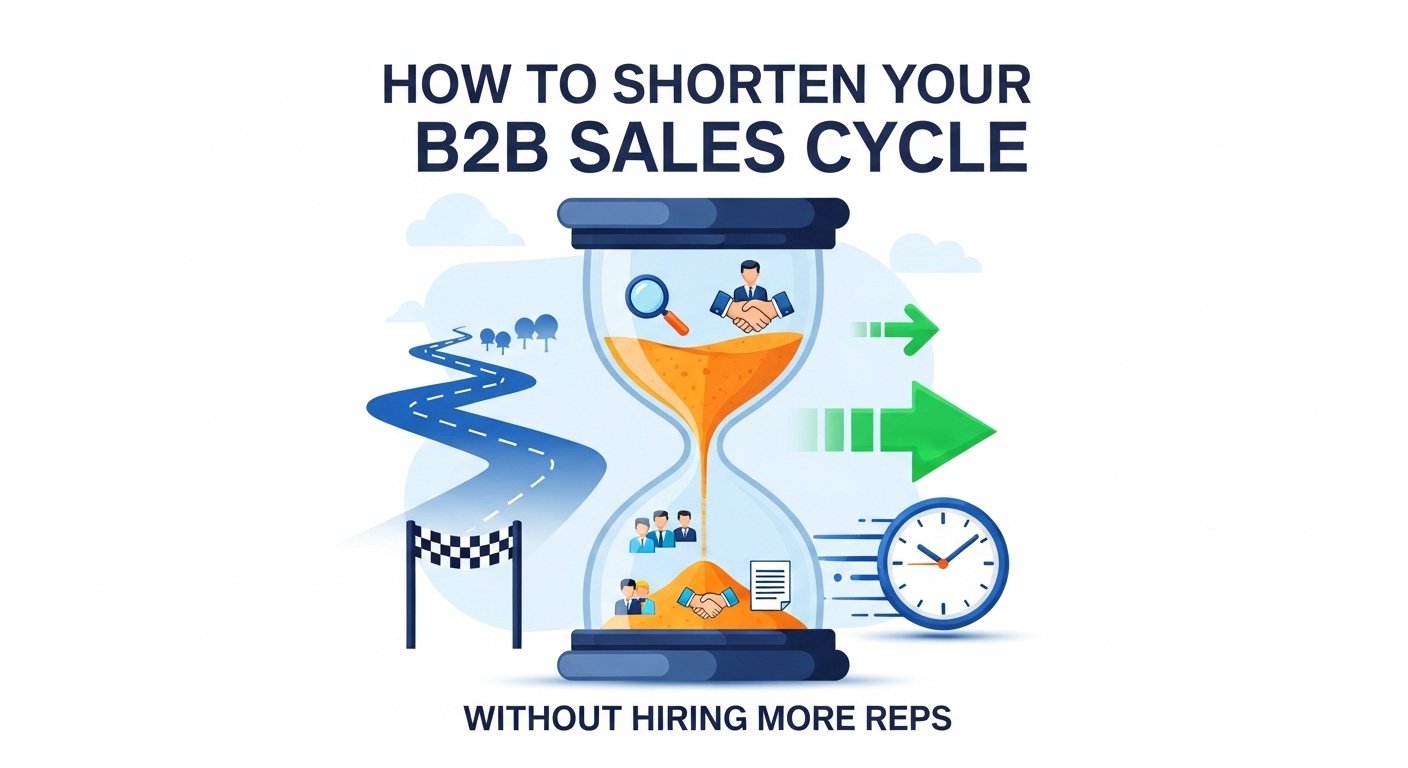
If your deals take months, you’re not alone. I’ve worked with teams where a single deal dragged on so long that the original champion left the company before signing. That’s not just frustrating it’s lost revenue. Long sales cycle problems quietly create revenue bottlenecks. Deals stall, pipelines clog, and suddenly your forecasts feel like guesses. The good news? You don’t need more reps to fix it. You need sharper execution.
This guide is about practical ways to reduce sales cycle time and improve deal velocity without expanding your team.
What Is a B2B Sales Cycle (And Why It Gets Long)?
Key Stages in a Typical B2B Sales Cycle
Most B2B sales cycles follow a familiar path:
- Lead generation process – bringing in potential buyers
- Prospecting – identifying real opportunities
- Qualification process – filtering serious buyers
- Proposal stage – presenting your solution
- Negotiation phase – ironing out terms
- Closing deals – final agreement
On paper, it’s clean. In reality, delays creep in at every stage.
Common Reasons Behind Long Sales Cycles
From what I’ve seen, these are the usual culprits:
- Too many stakeholders and approvals
- Poor lead qualification
- Unclear value proposition
- Weak follow-up strategy
- Lack of urgency on the buyer side
Most teams assume the problem is external. Often, it’s internal sales inefficiency.
Read more: https://garminlive.com/10-best-free-ai-tools-for-small-businesses-in-2026/
1. Improve Lead Qualification to Save Time
Focus Only on High-Intent Prospects
Stop chasing every lead. Seriously.
One of the biggest B2B sales challenges is confusing activity with progress. High intent leads those actively researching or comparing close faster.
Define your ideal customer profile (ICP) and stick to it. If a lead doesn’t fit, let it go early.
Use Data to Prioritize Leads
A good CRM with lead scoring changes everything. Instead of guessing, you’re working with signals:
- Website visits
- Demo requests
- Content engagement
Data-driven sales helps you focus on deals that actually move.
2. Align Sales and Marketing Teams
Create a Shared Definition of a Qualified Lead
This sounds basic, but it’s often broken.
Sales complains about low-quality leads. Marketing complains about ignored leads. Meanwhile, pipeline delays grow.
Agree on what a sales qualified lead looks like. Write it down. Use it.
Deliver Better Sales-Ready Content
Buyers don’t want more calls they want clarity.
Helpful content speeds decisions:
- Case studies
- FAQs
- Product comparisons
Good sales enablement content answers questions before they slow down your deal.
3. Simplify Your Sales Process
Remove Unnecessary Steps
Audit your pipeline honestly.
I’ve seen teams require three internal approvals before even sending a proposal. That’s not caution that’s friction.
Cut anything that doesn’t directly help close deals.
Use Automation to Speed Things Up
Automation doesn’t replace reps it removes busywork.
Examples that actually help:
- Automated follow-ups
- Proposal generation tools
- Digital contracts
Less manual effort = faster deal closing.
4. Improve Your Value Proposition
Communicate Clear ROI Early
If your buyer can’t justify the purchase quickly, your deal slows down.
Show ROI early. Numbers work better than features.
Here’s a simple way to think about it:
| Weak Message | Strong Message |
|---|---|
| “We improve efficiency” | “We reduce processing time by 30%” |
| “We save costs” | “We cut operational costs by $50K annually” |
Outcome-driven messaging removes hesitation.
Personalize Your Messaging
Generic pitches kill momentum.
Tailored messaging based on the prospect’s industry or pain points feels relevant. And relevance speeds decisions.
Even small personalization can make a difference.
5. Reduce Decision Friction for Buyers
Make Buying Easy
Some companies unintentionally make buying harder than it should be.
Fix the basics:
- Clear next steps
- Simple contracts
- Easy onboarding
If the process feels complicated, deals slow down. Every time.
Address Objections Early
Most objections are predictable.
Pricing concerns, integration worries, trust issues they come up again and again.
Pre-answer them through:
- FAQs
- Early conversations
- Transparent communication
This reduces back-and-forth later.
6. Use Social Proof to Build Trust Faster
Trust is often the hidden blocker.
Social proof accelerates decisions because it reduces perceived risk.
Use:
- Testimonials
- Client success stories
- Case studies with measurable results
I’ve seen deals close faster simply because a prospect recognized a familiar company in a case study.
7. Follow Up Smarter (Not Harder)
Timing Matters
Following up too late loses deals. Following up too often annoys people.
A structured sales cadence works better than random check-ins.
For example:
- Day 1: Initial follow-up
- Day 3: Share useful content
- Day 7: Check-in
Consistency beats intensity.
Use Multi-Channel Follow Ups
Email alone isn’t enough anymore.
Combine:
- Calls
Multi-channel outreach increases response rates and keeps deals moving.
Actionable Tips to Shorten Your Sales Cycle (Quick Wins)
- Pre-book the next call before ending the current one
- Send summaries after every meeting
- Use deadlines in proposals
- Qualify harder, earlier
- Share ROI calculators upfront
- Remove internal approval delays
These aren’t complex, but they work.
Real-Life Example (Mini Case Study)
One SaaS team I worked with had an average sales cycle of 90 days.
After making a few changes:
- Tightened lead qualification
- Introduced proposal automation
- Added ROI-focused messaging
Their cycle dropped to 55 days within three months.
No new hires. Just better process.
Read more: https://garminlive.com/indonesia-iptv-m3u-playlist-2026-free-channels-list/
FAQs:
How can I shorten my B2B sales cycle quickly?
Focus on high-intent leads, simplify your process, and communicate ROI early.
What tools help reduce sales cycle time?
CRM systems, automation tools, and proposal software are the most impactful.
Why is my sales cycle too long?
Usually due to poor qualification, too many stakeholders, or unclear value.
Can automation replace sales reps?
No. It supports reps by removing repetitive tasks.
What is a good B2B sales cycle length?
It is fluctuating but on average is 30 to 90 days based on the amount of the deal.
Conclusion:
Make Deal Closures Faster Without Growing Your Team. Getting your B2B sales cycle short does not involve working harder or employing more people. It is all about eliminating friction, paying attention to the right opportunities and enhancing your communicating value. In my experience, minor changes grow fast. Get your pipeline clean, get your team on track, and get easy purchasing.
Not only will you be able to close deals more quickly, you will correct the problems with the sales productivity that has been withholding your income.