Admin
Admin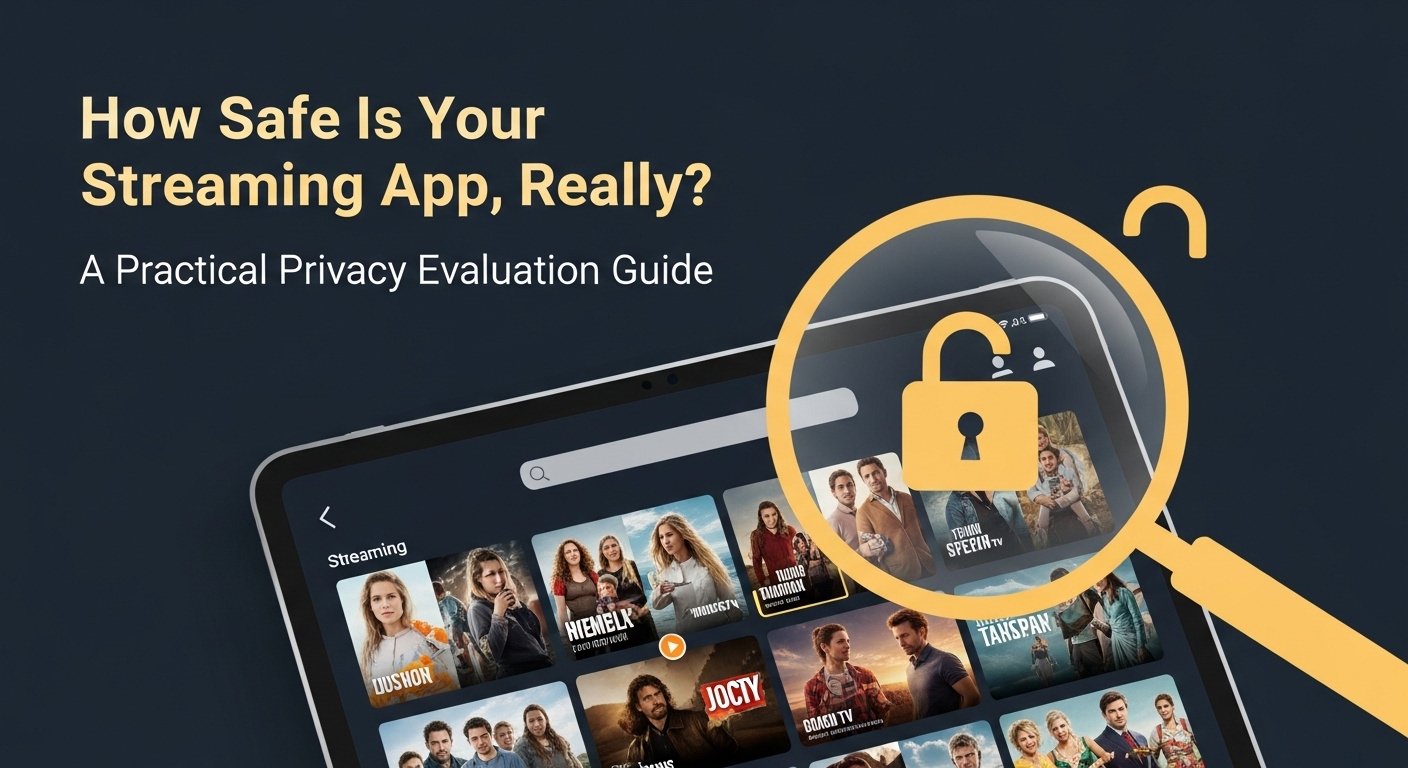
Are you aware of what your Netflix application is doing with your personal information when you are asleep? Majority of the people do not think about it. You close the application, lay aside the phone and that seems to be it. But here’s the real question worth asking how safe is your streaming app, really? However, a report by the Mozilla Foundation in 2023 found that most popular streaming services failed to do well when it comes to the most basic privacy standards. The guide will take you step by step on what these apps are actually gathering, how to read their privacy policies without losing your head and what exactly you can do to save yourself.
What Data Do Streaming Apps Actually Collect?
More than most people expect. By opening a streaming application, you are not merely watching television, you are stoking a data feed. These services gather your watch history, search history, device details (model, operating system, type of browser), vague location data through IP address and of course payment information in case you subscribe directly to it.
What throws people off their feet is the granulometry. Netflix not only has knowledge of what you watched, but it also has knowledge regarding the length of watching, pauses, and completion of the same. Such detail creates a rather realistic image of your habits.
Behavioral Data vs. Personal Data.
We have two general classes which it is well to distinguish. Personal Identifiable Information (PII) consists of your name, email, your billing address, and your phone number the awareness that you knowingly provide when you register.
Behavioral data is otherwise. It’s passive. It involves what you watch, the time you watch it, the number of times you replay a scene, and what you look but never open. What I have observed is that most people completely concern themselves with the first category and completely disregard the second, but actually, the latter is more valuable to the advertisers.
Read Related Article: https://garminlive.com/marketing-trend-predictions-2026/
How to Read a Streaming App’s Privacy Policy (Without Falling Asleep)
Nobody reads these. I get it. However, you need not read the entire thing. Go to the privacy policy and press Ctrl+F and put in the following words: third party, sell, retain, and share. The four terms will describe you 80% of what you really need to know.
As an example, the privacy policy of Amazon Prime Video (unofficially translated) says that the history can be viewed to personalize the ads and that the data can be exchanged with other services Amazon belongs to. There is nothing alarming about that, but it should be known.
Red Flags to Watch For in Any Privacy Policy
Some warning signs that should make you pause:
- Unclear expression such as may share with partners, but no further elaboration as to who are those partners.
- There is no obvious mechanism of opting out of data sharing.
- The retention times that are indefinitely stated or not stated.
- No reference to GDPR or CCPA rights in case the service is located in the US or the EU.
These are not necessarily deal breakers but they are indicators that the platform is not completely telling the truth
Streaming App Security: Is Your Account Actually Protected?
The hacks of the streaming accounts are more frequent than people believe, and not due to sophisticated attacks. It is, most of the time, credential stuffing: somebody steals a leaked username/password combo in another breach and uses it in Netflix, Hulu, etc. You are in real danger in case you use the same passwords.
Common Streaming App Security Vulnerabilities
The key dangers are rather simple: insecure or bad passwords, no two-factor authentication systems, using a common account with individuals that you do not trust entirely, and use public Wi-Fi without a VPN. Even phishing emails that are supposed to be came across as Netflix or Disney+ are now more believable than before.
How to Secure Your Streaming Accounts Right Now
A few things you can do today:
- Enable two-factor authentication wherever it’s available (Netflix now supports this)
- Use a password manager to generate unique passwords for each streaming account
- Enter the account settings and check all the ongoing sessions – delete all the devices that are not familiar to you.
- If you share an account, be selective about who has your login credentials
Privacy Settings You Should Change Immediately on Popular Streaming Apps
| Platform | Key Setting to Change | Where to Find It |
|---|---|---|
| Netflix | Opt out of personalized ads | Account > Privacy & Data |
| Amazon Prime | Disable interest-based ads | Amazon Ad Preferences |
| Hulu | Turn off targeted advertising | Account > Privacy Settings |
| Disney+ | Manage data sharing consent | Account > Data Controls |
Netflix Privacy Settings Guide
Tap on your account page, then at the bottom, tap Privacy and Data and you will have a choice to customize your ad preferences, remove viewing history, and restrict data used to make recommendations. Numerous individuals do not visit this page. It takes about three minutes.
Amazon Prime Video Privacy Settings
Amazon connects the Prime Video information with your larger Amazon profile, so this is slightly a little more stratified. Go to the main account preferences of Amazon, and select the advertisement preferences, which is located in the advertising preferences and select the no interest-based ads. Your Account > Data and Privacy should also be checked.
Hulu & Disney+ Privacy Controls
It is fairly easy to disable targeted advertising in the account privacy settings of Hulu. Still, Disney + exposes users to rather limited resources, yet you have an opportunity to regulate communication preferences and certain data sharing options via your account dashboard.
Should You Use a VPN With Your Streaming App?
Frank reply a VPN is useful in some aspects but not all. It conceals your activity as well as your IP address, thereby limiting location-based tracking by your ISP. Nevertheless, it does not prevent Netflix or Hulu to gather your behavioral data even when you are logged in. The application continues to know what you are watching.
That said, using a reputable paid VPN on public Wi-Fi while streaming is a sensible habit. Free VPNs are worth avoiding many of them monetize your data, which defeats the purpose entirely.
Read Related Article:https://garminlive.com/incogni-vs-kanary-which-actually-protects-your-privacy-in-2026/
Kids and Streaming Apps: Extra Privacy Concerns to Know
Children’s data is treated differently under U.S. law. COPPA (Children’s Online Privacy Protection Act) restricts what platforms can collect from kids under 13. Netflix Kids profiles and Disney+ Kids Mode are designed with this in mind, but the protections aren’t automatic you have to actually set up the kids profile correctly.
From what I’ve observed, a lot of parents just hand over a device with a regular profile active. Worth taking ten minutes to set up a proper kids profile and review what permissions the app has on that device.
FAQs
Q1: Is Netflix safe to use for personal data?
Netflix is generally considered safe in terms of security, but it does collect significant behavioral data. Read their privacy policy and adjust data settings under your account to limit what’s shared.
Q2: Do streaming apps sell your data to advertisers?
The majority of them do not sell in the usual meaning of the word, yet they do transmit information to advertising partners. Tiers based on ad-supported are particularly more sharing of data as compared to premium plans.
Q3: Can streaming apps listen through my microphone?
Only if you’ve granted microphone permissions. Check your phone settings and revoke mic access for any streaming app that doesn’t actually need it for voice search.
Q4: How do I delete my data from a streaming app?
Most platforms have a data deletion request option in account settings or privacy pages. GDPR and CCPA give users in qualifying regions a formal right to request this.
Q5: Is it safe to use streaming apps on public Wi-Fi?
It is more dangerous than a clandestine relationship. Streaming on a regular basis in public networks Use a paid VPN.
Q6: What is the most private streaming app?
None of the significant platforms may be really privacy-first, yet such services as Mubi or smaller independent platforms are less likely to collect as much data as the large ones.
Conclusion
Actions that are the most important: examine your application permissions, update your privacy on Netflix, Amazon, Hulu, and Disney+, turn on two-factor authentication, and see your current activity. All this does not take longer than an afternoon.
You don’t have to be paranoid about streaming apps just informed. Take fifteen minutes this week to audit your accounts. And if this was useful, share it with someone who streams every day. They probably haven’t thought about any of this either.