

Someone texted “DND rn” and then completely vanished. No replies. No explanation. Just… silence.
If that’s ever happened to you, you’re not alone.
I see DND pop up constantly now in WhatsApp chats, Instagram DMs, bios, even random replies that feel slightly cold if you don’t know what’s going on. It’s one of those texting abbreviations that looks simple but can mean different things depending on who’s using it and where.
From what I’ve seen, especially with Gen Z and heavy smartphone users, DND has become shorthand for boundaries. Phones are always buzzing, and people are trying to control that noise using quick, no-nonsense slang.
Let’s break down the DND meaning in text, how people actually use it, and when it’s fine or not so fine to say it.
What Does DND Mean in Texting?
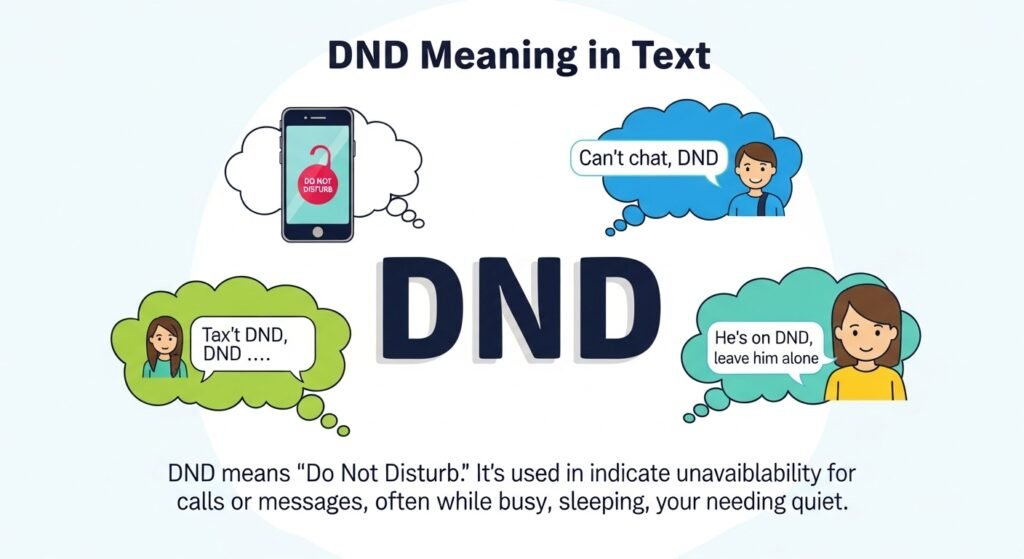
At its core, DND meaning in texting usually stands for “Do Not Disturb.”
It tells the other person that the sender is unavailable and likely won’t reply for a while.
That said, DND text meaning is very context-based. I’ve seen it used to signal:
- A phone setting
- A personal boundary
- A temporary break from chatting
- Or something completely different in gaming chats
Most of the time, though, if someone sends “DND” in a message, they’re basically saying: don’t expect quick replies.
Most Common Meaning of DND – “Do Not Disturb”
DND as “Do Not Disturb” Mode
This is by far the most common DND slang meaning.
Phones literally have a Do Not Disturb mode now, so the abbreviation slid naturally into texting language. People use it to explain why they’re going quiet.
Examples I see all the time:
- “I’m on DND”
- “Putting phone on DND”
- “DND till morning”
It’s especially common during:
- Sleep hours
- Exams or study sessions
- Work meetings
- Family time
In this context, DND meaning in chat is practical, not dramatic.
How DND Is Used in Messages & Chats
You’ll spot DND in different places, not just messages.
Common usage includes:
- “On DND, talk later”
- WhatsApp statuses like “DND 📵”
- Instagram bios saying “DND most days”
- Snapchat replies with just “DND”
From my experience, when it’s in a bio or status, it’s more of a general warning than a personal message.
Other Meanings of DND in Text
DND as “Dungeons & Dragons”
If you’re talking to a gamer, DND meaning online can shift completely.
In gaming circles, DND almost always refers to Dungeons & Dragons, the tabletop role-playing game.
Examples:
- “Can’t talk, playing DND”
- “DND session tonight”
- “Met my DND group”
Here, there’s zero connection to phone settings. Many people overlook this and assume someone is ignoring them awkward mistake.
DND as “Do Not Disclose” (Rare Use)
This one exists, but it’s rare in casual texting.
You’ll usually see DND as “Do Not Disclose” in:
- Business chats
- Legal or professional notes
- Formal documentation
In everyday messaging, this meaning almost never comes up unless the conversation is already serious or work-related.
How to Understand the Right Meaning of DND
Check the Context
Context does most of the work here.
Ask yourself:
- Is this a casual chat or a gaming conversation?
- Did they mention work, sleep, or being busy?
- Is this someone who plays DND (the game)?
Understanding message context clues saves a lot of confusion.
Look at Platform & Situation
Where you see DND matters a lot.
| Platform | Most Likely Meaning |
|---|---|
| WhatsApp status | Do Not Disturb |
| Instagram bio | Limited availability |
| Gaming chat | Dungeons & Dragons |
| Work message | Do Not Disturb / Do Not Disclose |
Same letters, totally different vibes.
Examples of DND Used in Real Conversations
Casual Chat Examples
- “On DND, will text later.”
- “Putting my phone on DND for a bit.”
- “DND rn, talk tonight?”
These are polite heads-ups, not brush-offs.
Social Media & Status Examples
- WhatsApp status: “DND till exams are over”
- Instagram bio: “Mostly DND”
- Snapchat story caption: “DND mode activated”
These are more about setting expectations than ignoring people.
When Should You Use DND in Texting?
Using DND meaning in texting makes sense when you want space without drama.
Good times to use it:
- During meetings
- While studying
- When you need a mental break
- Late at night
From what I’ve noticed, people appreciate clarity more than silence.
When NOT to Use DND
There are moments when DND can come off as careless.
Avoid using it:
- During serious conversations
- When someone needs support
- In professional chats without explanation
Just dropping “DND” with no context can feel dismissive, even if you don’t mean it that way.
Is DND Rude or Polite?
Honestly? It depends.
DND itself isn’t rude but tone matters.
Compare:
- “DND, talk later” ❌
- “On DND for a bit, will reply soon” ✅
Adding a few extra words softens the message and shows respect.
DND vs Similar Texting Abbreviations
DND vs AFK
- DND: Not available, notifications muted
- AFK: Away from keyboard, usually temporary
AFK is more common in gaming or work chats.
DND vs BRB
- BRB: I’ll be right back
- DND: I’m unavailable for a while
BRB feels lighter and shorter.
DND vs Silent Mode
Silent mode just mutes sound.
DND usually blocks notifications and replies altogether at least socially.
FAQs
What does DND mean in texting?
It usually means Do Not Disturb, signaling unavailability.
Is DND short for Do Not Disturb?
Yes, most of the time.
What does DND mean on WhatsApp?
It usually refers to phone or chat unavailability.
What does DND mean on Instagram?
Often used in bios to show limited availability.
Can DND mean Dungeons and Dragons?
Yes, especially in gaming contexts.
Is DND rude to say in text?
Not if you add context or explanation.
How long should DND be used?
As long as you’re unavailable no fixed rule.
What’s the difference between DND and silent mode?
DND blocks interruptions more completely.
Final Thoughts
The DND meaning in text reflects how people communicate now quick, boundary-aware, and sometimes blunt. Language keeps evolving, and shorthand like this helps people manage attention in a noisy world.
From what I’ve seen, understanding context is everything. Same three letters, different meanings, different intentions. Once you know that, DND stops feeling confusing and starts making sense.
About The Author


Pingback: SYBAU in Texting: Slang Meaning Most People Get Wrong - Garmin Live®