
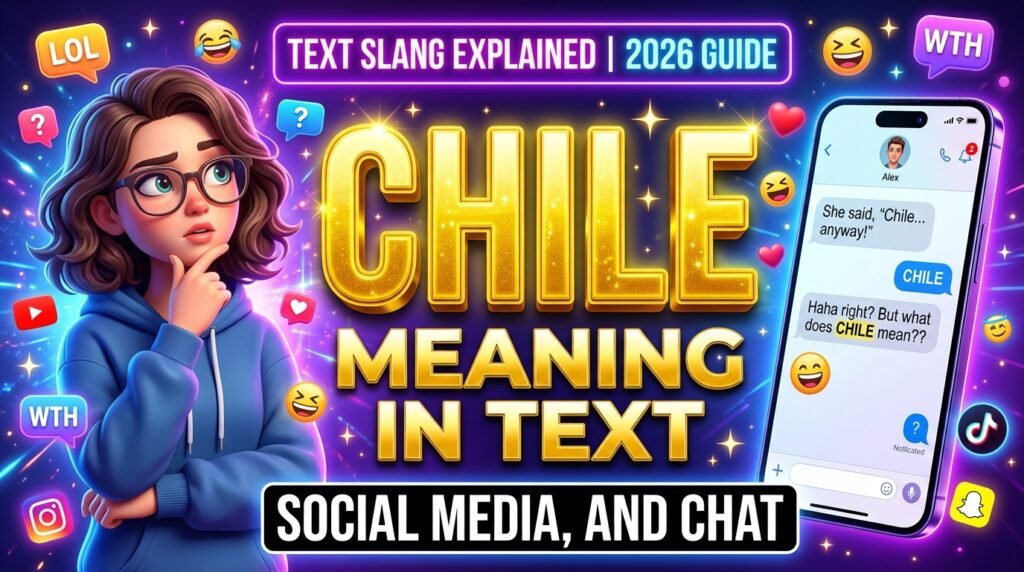

Understanding “Chile” when texting
If you’ve seen the word “chile” in a text message, TikTok comment, IG post or online conversation and you don’t know what it means, you’re not alone. It can refer to the country in South America but in internet slang it’s used to convey surprise, disbelief, laughter, frustration or a variety of other emotions. The interpretation of “chile” will depend on the context (for example: funny or shocking).
Slang spreads quickly on social media platforms just like this one so if you see a word that seems strange or out of place, you should definitely look it up. “Chile” has exploded in popularity among younger people on platforms like TikTok, X (formerly known as Twitter), Snapchat and Instagram because people often use it to respond to something funny, shocking, dramatic, etc.
We’ll go over what “chile” means in text messaging, how you can use it on social media and in an online chat, where this slang originated from, and provide real-life examples. Whether you’re confused about what your friends are sending you through text message or are just trying to stay current with the newest internet slang, this guide is for you!
What “Chile” Means
Chile is slang for child specifically used as an exclamation to express shock, exasperation, disbelief, or just general drama. Think of it as the written version of someone saying “Child, please…” with their whole chest.
You’ll see it dropped at the beginning of a sentence most often, like punctuation that carries attitude.
Chile = Child: The Basic Breakdown
The word “chile” is a phonetic spelling of “child” the way it’s actually said in certain dialects, particularly in AAVE (African American Vernacular English). It’s not a typo. It’s not autocorrect being weird. intentional spelling that carries a specific tone.
Think about how you’d say “child” out loud when you’re exasperated it probably sounds more like “chiiiiild” than a crisp, two-syllable word. That’s exactly the energy “chile” is going for.
How It’s Pronounced vs. How It’s Used
In spoken form, it’s usually drawn out “chiiiile” for extra emphasis. The longer the “i,” the more dramatic the situation. In text, you’ll often see it followed by an ellipsis (“Chile…”) or three dots that just hang there, letting the judgment marinate.
Example: “Chile, I cannot believe she said that at the dinner table.”
That sentence? It’s doing a lot of work. Shock, disbelief, probably a little bit of secondhand embarrassment. One word, all of that.
Where Did “Chile” Slang Come From?
This one has roots in AAVE and Black American culture specifically in the way Southern dialects pronounce the word “child.” It’s been part of spoken language for a long time, but it went seriously mainstream around the early 2010s with reality TV.
From what I’ve seen, a lot of people trace the big viral moment back to The Real Housewives franchise particularly NeNe Leakes, who used it so naturally it basically became a cultural shorthand. Once TikTok entered the picture, the word exploded. You couldn’t scroll for five seconds without seeing “Chile…” in a comment section or reaction video.
That’s usually how slang moves it starts in a specific community, gets amplified by pop culture and social media, and suddenly everyone’s using it.
How “Chile” Is Used in Texts and Social Media
This is where it gets fun. “Chile” isn’t just one thing it shifts depending on context. I’ve noticed it pulls triple duty depending on the vibe of the conversation.
As an Exclamation of Shock
The most common use. Someone tells you something wild, and your only possible response is:
“Chile… did he really just say that??”
No other words needed. The “chile” says it all.
As an Expression of Sass or Shade
This is the version that comes with a raised eyebrow. Used when someone is being judged (usually gently, sometimes not):
“Chile, not her showing up in that same outfit again.”
There’s a whole silent “I cannot” baked into that sentence. It’s shade, but delivered with a kind of performative exhaustion rather than outright cruelty. Big difference.
As Friendly Exasperation
Not everything has to be dramatic. Sometimes people use it just to vent in a casual, relatable way:
“Chile, this week has been something else.”
That’s not gossip. That’s just a person who’s tired and needs someone to commiserate with. Which is honestly very relatable.
Chile vs. Other Similar Slang Words
If you’re navigating Gen Z/millennial online slang, you’ll notice “chile” often shows up alongside words like “periodt,” “oop,” and “no cap.” They’re not interchangeable each has its own lane.
“Periodt” signals finality conversation over, point made. “Oop” is more of a startled reaction, like an involuntary response to receipts being dropped. “No cap” is just emphasizing that something is true. “Chile” is the one that opens a sentence and sets a tone of disbelief or exhaustion before you even get to the actual content.
They can also stack: “Chile… oop. No cap, I wasn’t expecting that.” Completely valid sentence on the internet in 2025.
Real Examples of “Chile” in Conversations
Here are a few quick examples of how this looks in actual texts:
- Friend 1: “He showed up an hour late and didn’t say sorry.”
Friend 2: “Chile… 😩” - Friend 1: “I just got promoted at work!”
Friend 2: “Chile, yes!! You deserve it!” - Comment on a viral TikTok: “Chile the way I gasped 💀”
Many people overlook the fact that “chile” isn’t always negative — it works for positive shock too. It’s really just an all-purpose signal that something has caught you off guard.
Is “Chile” Offensive? Can Anyone Use It?
Short answer: it’s not a slur or offensive word. It’s a slang term rooted in AAVE, and like a lot of language that comes from Black communities, it’s been widely adopted online by people of all backgrounds.
That said, it’s worth being aware of where it comes from. Using slang without knowing its context is one of those things that occasionally comes across as… a bit oblivious. Not a crime, but worth knowing. Most people are pretty chill about it in casual settings.
FAQs About “Chile” Slang
What does “chile” mean when a girl text it to you?
Usually she’s expressing shock, drama, or exasperation not talking about food. Read the context of the conversation.
Is “chile” the same as “child”?
Yes it’s a phonetic spelling of “child,” used informally to express emotion.
Is “chile” a bad word?
Nope. It’s neutral slang. The tone is entirely based on context.
Where is “chile” used most?
TikTok, Twitter/X, Instagram comments, and everyday texting. Basically anywhere people are being even slightly dramatic online.
Is “chile” still popular in 2025?
Still going strong. It’s settled into the kind of slang that doesn’t feel forced anymore it’s just part of how people communicate online.
Quick Recap
So what does “chile” mean in text?
- It’s slang for “child,” rooted in AAVE
- Used to express shock, sass, or friendly exasperation
- Works at the start of a sentence to set a tone before the actual tea gets spilled
- Not offensive, widely used across social platforms
- Still very much a thing in 2025
Next time someone texts you “Chile…” just know: something worth reacting to is coming. Buckle up.
About The Author